10 Common Wall Paneling Mistakes (And How to Avoid Them Like a Pro)
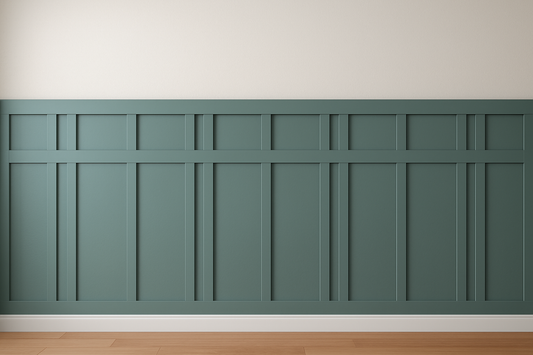
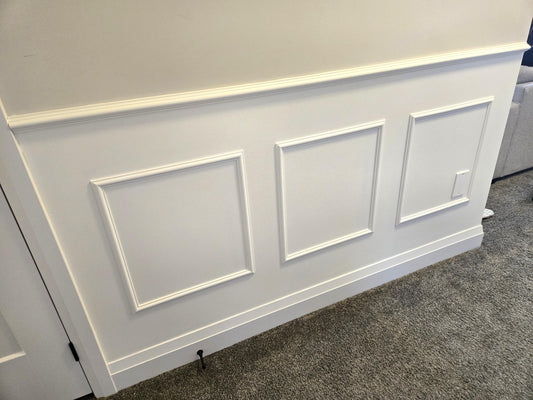
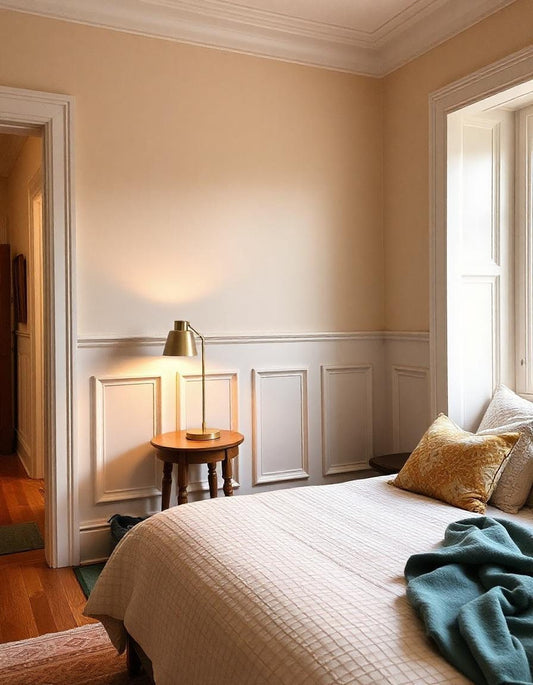
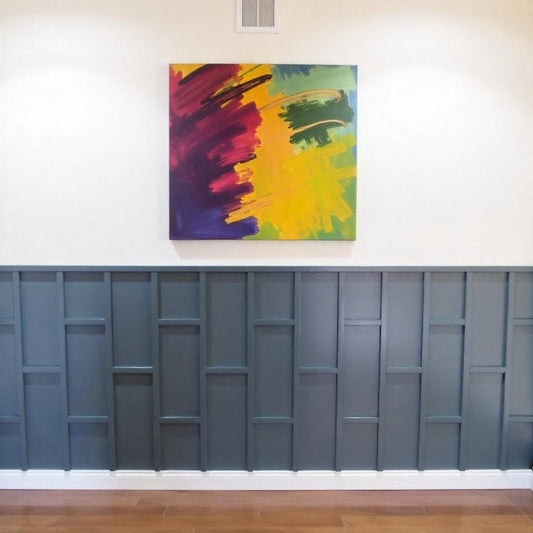
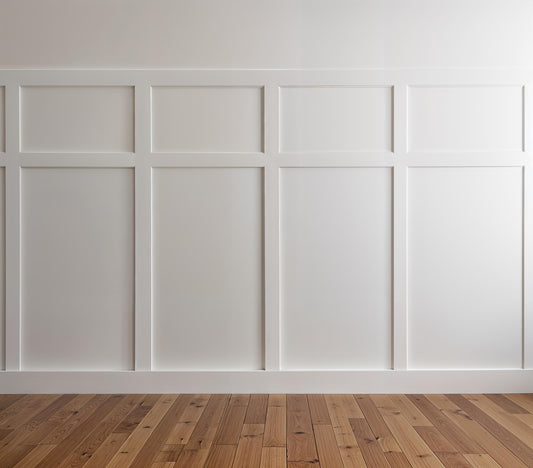
Wall paneling can completely transform a room — but the difference between “custom designer look” and “DIY gone wrong” comes down to proportion, planning, and precision.
After designing hundreds of custom wall trim kits for entryways, staircases, dining rooms, offices, and full homes, these are the most common wall paneling mistakes I see — and exactly how to avoid them.
If you’re planning DIY wall molding, board and batten, or picture frame paneling, read this first.
1. Ignoring Wall Proportions
One of the biggest mistakes in DIY wall molding is copying a design without adjusting it to your wall size. Just because a layout looks beautiful on Pinterest does not mean it will work in your space.

Panels that are too tall, too narrow, too short, or unevenly scaled make the entire wall feel off-balance. This is especially common in dining rooms and staircases where proportions matter the most.
A very common mistake I see:
Bottom panels that are too short and wide, with too much empty space between them. Even if spacing is technically “even,” the wall can still feel awkward because the proportions are wrong.
What to do instead:
Measure the full wall width and the usable wall height — meaning the space between the top of your baseboard and the ceiling or crown molding. Do not guess. Do not eyeball it.
Design your wall paneling layout based on proportion, not inspiration photos. In general:
Panels should feel balanced within the wall.
Spacing between panels should be consistent.
The outer spacing from wall edge to first panel can be slightly adjusted for better visual balance.
Proportion is what makes wall trim look custom and high-end.
2. Not Accounting for Baseboards and Crown Molding
Existing trim changes everything.
This is one of the most overlooked parts of wall paneling installation. Many homeowners plan their layout from floor to ceiling without considering how much their baseboards and crown molding project from the wall.

If your panel trim is thicker than your baseboards or crown molding, it will stick out past them. That’s not necessarily wrong — but it must look intentional.
For example:
If your baseboards are ¼ inch thick and your wall molding is ½ inch thick, your panels will project further out. That can look beautiful — but only if the design is planned around it.
I always tell customers:
Before choosing trim width or thickness, measure how far your baseboards and crown molding stick out from the wall. This small step prevents uneven transitions and awkward overhangs.
In some cases, adding a cove molding or transition piece creates a seamless look between baseboards and board and batten.
Wall molding is not just about width — it’s about depth.
3. Uneven Spacing Between Panels
This one is very common in DIY board and batten projects.
People will measure one section, then copy that spacing across the entire wall without checking the total wall width. The result? The last panel ends up much narrower than the others.
That instantly makes the wall look unprofessional.
When installing picture frame molding or wainscoting, spacing must be calculated across the entire wall first — not panel by panel.
The correct approach is:
Take your total wall width.
Subtract the total width of all panels.
Divide the remaining space evenly.
And sometimes — this is important — the spacing from the wall edge to the first panel can be slightly different than the spacing between panels. That is not wrong. It often looks better.
Design is about visual balance, not strict math.
4. Designing Staircase Paneling Without Considering Angles
Staircase wall paneling is one of the most requested designs — and also one of the easiest to get wrong.
Most staircase walls are not perfectly square. Even a one-degree difference in angle can make pre-cut diagonal pieces visibly off.
I never recommend fully pre-cutting staircase angles unless final trimming can be done on site.
The correct way to approach staircase molding:
Install the straight pieces first.
Measure the diagonal piece after the straight pieces are in place.
Trim the angle on site for a perfect fit.
Trying to force a pre-cut diagonal piece onto a staircase wall often results in gaps or uneven seams.
This is why custom staircase wall paneling requires extra planning and flexibility.
5. Forgetting to Plan Around Outlets, Switches, and Thermostats
Nothing disrupts a wall paneling layout faster than forgetting about wall outlets.
I always recommend planning panel placement around:
Electrical outlets
Light switches
Thermostats
Alarm panels
Yes, trim can be notched out. Yes, adjustments can be made. But designing around obstacles from the beginning gives you a cleaner and more intentional result.
Pro tip:
Place panels first on paper. Then overlay the outlet positions. Adjust spacing slightly if needed.
Small adjustments make a big difference.
6. Making Bottom Panels Too Short Behind Furniture
This one surprises people.
Many homeowners ask: “Should I skip the bottom panels behind my sofa?”
You can — but I usually recommend installing them anyway.
Why?
Because furniture moves. Layouts change. And if you remove the sofa later, the wall will look unfinished.
Even if the bottom panels are partially hidden, they maintain visual continuity and preserve the integrity of the design.
A complete wall always looks more custom than a partial one.
7. Not Checking for Level Walls
Here’s something most people don’t realize:
Most walls are not perfectly straight.
If you measure from the floor without checking level, your panels may slowly drift upward or downward across the wall.
Always use a level during installation. Never rely on floor or ceiling lines alone.
Professional-looking wall molding comes from precision, not assumptions.
8. Choosing Trim Width Without Considering the Room Size
Not all trim widths work in all spaces.
For example:
Very wide trim in a small hallway can feel heavy.
Very thin trim on a large 10-foot wall can look underwhelming.
When designing custom wall trim kits, I always consider:
Wall height
Room size
Furniture scale
Existing trim thickness
Proportion again matters more than trend.
9. Skipping Dry Layout Before Installation
One of the simplest ways to avoid wall molding mistakes is laying everything out on the floor first.
Dry-fit your pieces.
Double-check measurements.
Confirm spacing.
Then install.
This extra step prevents material waste and frustration.
10. Rushing the Design Stage
This might be the biggest mistake of all.
Wall paneling is architectural detail. It changes the entire feel of a room. Rushing the layout almost always leads to regret.
Measure carefully.
Plan intentionally.
Adjust spacing.
Think about furniture placement.
Consider trim depth.
The design stage is where the magic happens.
Final Thoughts: Custom Wall Paneling Done Right
Wall paneling, board and batten, and picture frame molding are some of the most impactful upgrades you can make to your home.
But the difference between high-end custom millwork and “something feels off” comes down to proportion, spacing, and precision.
If you want help designing a layout tailored specifically to your wall dimensions, I create scaled custom sketches before any cuts are made. That way, everything is intentional — and nothing is left to guesswork. Send us a message at support@wondrwallz.com and let's get started!
Because beautiful walls are not accidental. They’re designed.